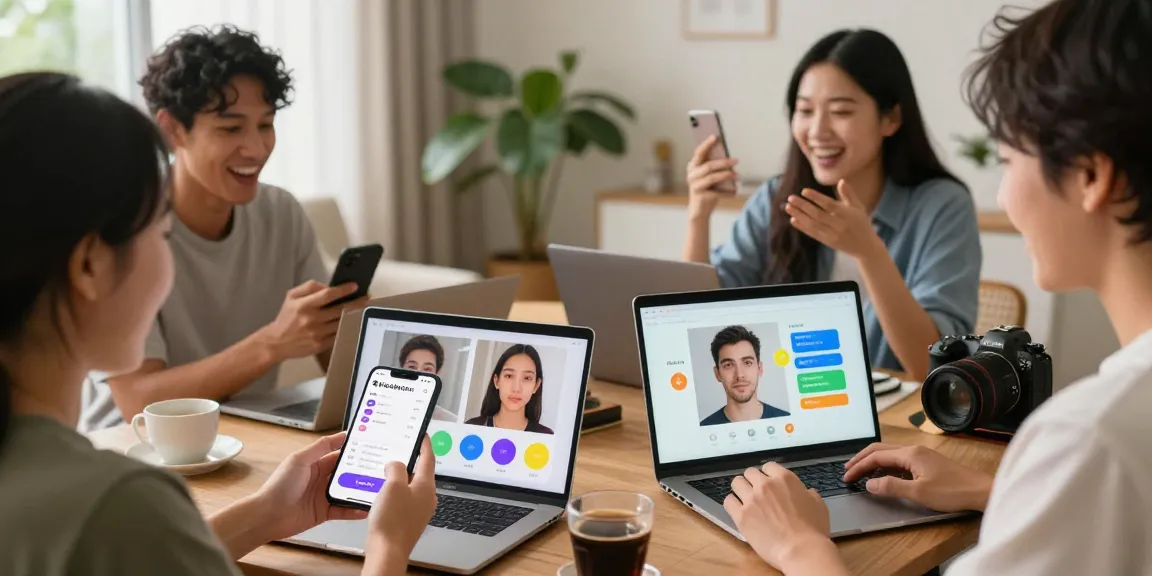
Understanding Facial Age Estimation Technology
In today’s fast-paced digital era, the curiosity about appearance and age has transcended beyond mere vanity. With the advent of advanced technology, how old do I look tools have gained popularity, allowing users to assess their perceived age through facial analysis. These innovative platforms employ artificial intelligence (AI) algorithms to provide a quick and accessible means to evaluate how others might perceive your age based on facial features. The implications of this technology are profound, touching on aspects of beauty, confidence, and even social dynamics.
What is Facial Age Estimation?
Facial age estimation is the process of estimating a person's biological or perceived age based on the analysis of their facial features. This technology typically involves machine learning models trained on vast datasets of human faces across various ages, allowing the algorithms to identify patterns and markers characteristic of different age groups.
How Do AI Algorithms Determine Age?
AI algorithms for facial age estimation utilize convolutional neural networks (CNNs) to detect features such as wrinkles, skin texture, and tone, as well as facial structure. By analyzing these elements, the algorithms can provide an estimate of the individual’s age. Many models are trained by comparing labeled images (i.e., images of faces where the ages are known), enabling the system to learn age-related attributes over time.
Benefits of Using AI for Age Prediction
- Speed and Convenience: Users can receive instant age assessments by simply uploading a photo, making it a fast solution compared to traditional age assessments.
- Accessibility: This technology is available to anyone with internet access, democratizing the ability to explore age perception.
- Fun and Engaging: Many people enjoy testing facial age estimators out of curiosity or for entertainment, adding a playful element to their online experience.
How Accurate is the “How Old Do I Look” Tool?
Understanding the accuracy of these tools is essential, especially when considering their implications for self-perception and social interactions. The accuracy of AI-based facial age estimators can vary greatly depending on several factors.
Factors Influencing Accuracy
The accuracy of age estimation tools depends on multiple factors, including the quality of the input image, lighting conditions, and the individual’s unique facial characteristics. For instance, high-resolution images under good lighting typically yield more accurate results than low-resolution or poorly lit images.
User Experience and Feedback
User experience also plays a crucial role in determining the effectiveness of these tools. Many users find that while the results are often in the right ballpark, they may not always reflect their true age. Gathering user feedback can help developers refine their algorithms for greater precision.
Comparative Analysis with Competitors
When comparing tools like FaceAge.ai or Fotor, differences in accuracy can be apparent. Some platforms are noted for their user-friendly interfaces and privacy safeguards, while others may offer a broader range of features that enhance user experience. This landscape suggests that users should try various tools to find the one that best meets their needs.
Trends in AI-driven Age Detection in 2026
The future of age detection technology appears bright, with continuous advancements expected in the coming years.
Emerging Technologies in Facial Recognition
As facial recognition technology evolves, the integration of augmented reality (AR) and virtual reality (VR) is anticipated. These advancements could lead to more immersive experiences where users can visualize aging effects over time or even use filters that simulate signs of aging.
Integrating User Data for Better Results
Future age estimation tools are likely to integrate user data more extensively, enhancing accuracy through machine learning. By analyzing user feedback and behavior over time, these tools can adapt and improve their predictions, leading to a more tailored experience.
Predictions for Future Developments
As technology progresses, we might see age estimation tools being employed in more serious contexts, such as healthcare and personalized skincare solutions, where understanding biological age could play a crucial role in treatment efficacy.
Practical Uses of Age Estimation Tools
The applications for age estimation technology extend far beyond casual use and have significant potential across various industries.
Social Media Applications
In the realm of social media, users often seek validation regarding their appearance. Age estimation tools can provide insights that enhance personal branding, allowing users to share their results, engage with followers, or even choose the best angles that represent them authentically.
Marketing and Personal Branding Strategies
Businesses can leverage age estimation technology to tailor their marketing strategies. Understanding the perceived age of consumers can help brands create targeted campaigns that resonate with specific demographics, improving engagement and conversion rates.
Fun and Entertainment Value
Age estimation tools also serve an entertainment purpose, with many users enjoying the novelty of discovering how they are perceived by AI. This can lead to social interactions and discussions, sparking a broad interest in beauty and aging.
Common Questions About Age Estimation Tools
As with any emerging technology, users often have questions regarding the efficacy and safety of age estimation tools.
Are These Tools Accurate for Everyone?
While many users find these tools to be entertaining and relatively accurate, results can vary significantly based on facial structure, skin conditions, and other individual differences. It's essential to approach these results with a healthy dose of skepticism.
How Safe Is My Data When Using These Apps?
Data privacy is a paramount concern. Most reputable sites prioritize user privacy, ensuring that uploaded images are not stored or used beyond the purpose of age estimation.
Can I Trust AI Predictions for Serious Decisions?
While AI predictions can offer fascinating insights, they should not be the sole basis for any serious life decisions. Instead, they can complement personal reflections on self-image and aging.
What Should I Consider Before Using Age Estimation?
Before using age estimation tools, consider factors such as image quality, privacy policies, and how you might react to the results. Understanding these aspects can enhance your experience.
How Do I Get the Best Results from These Tools?
To achieve the most accurate age estimates, use well-lit, high-resolution images and ensure that your face is clearly visible. This allows the algorithms to work effectively, providing results that are closer to reality.